Navigating the Rugged Terrain: Key Specifications of All-Terrain Forklifts
2025-08-12 03:45:28
All-terrain forklifts are designed to operate efficiently on uneven, rough, or loose surfaces, making them indispensable in construction, agriculture, and logistics. One of the most crucial specifications is their load capacity, which typically ranges from 5,000 to 36,000 pounds, depending on the model. Unlike standard forklifts, these machines feature reinforced chassis and heavy-duty axles to ensure stability under heavy loads. Additionally, their lifting heights can extend up to 20 feet, allowing for efficient material handling in challenging environments.
Engine performance is another critical factor in all-terrain forklift specifications. Most models are equipped with powerful diesel or LPG engines, delivering between 50 to 150 horsepower. These engines provide the torque needed to navigate steep inclines and muddy terrain while maintaining fuel efficiency. Some advanced models also incorporate hybrid or electric powertrains, reducing emissions without compromising performance. The inclusion of all-wheel-drive systems further enhances traction, ensuring reliable operation on slippery or uneven ground.
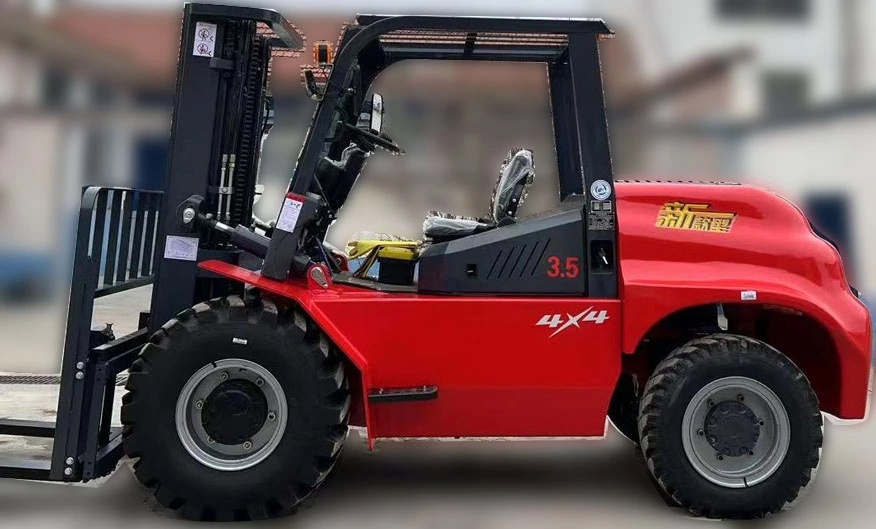
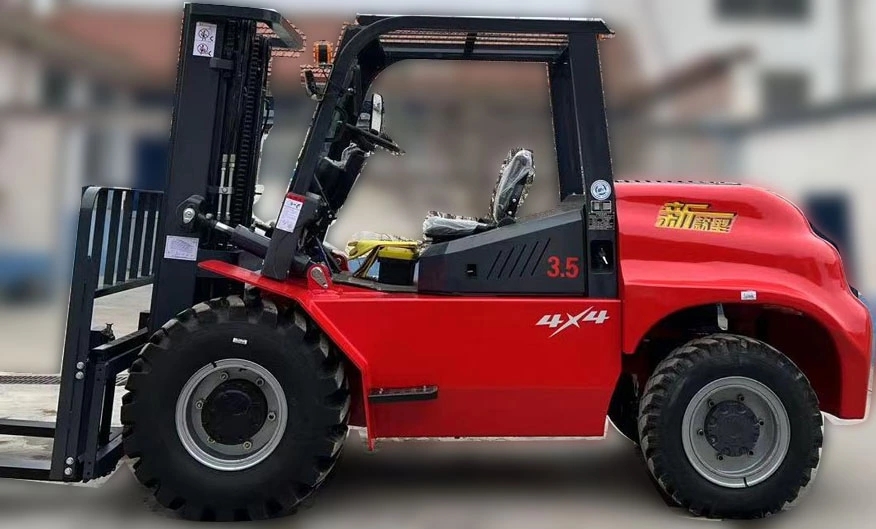
Tire design plays a pivotal role in the functionality of all-terrain forklifts. Unlike standard pneumatic tires, these forklifts often feature large, deep-treaded tires or even solid rubber tires for maximum grip and durability. The tire specifications vary based on application—wider tires distribute weight more evenly on soft ground, while aggressive tread patterns improve traction on rocky or muddy surfaces. Some models also offer adjustable tire pressure systems, allowing operators to optimize performance for different terrains.
Maneuverability is a key consideration in all-terrain forklift specifications. These machines typically have a tight turning radius, often between 8 to 12 feet, enabling precise navigation in confined spaces. Advanced hydraulic steering systems and responsive controls further enhance operator comfort and efficiency. Additionally, many models come with oscillating axles or articulated frames, which improve stability on slopes and uneven ground, reducing the risk of tipping.
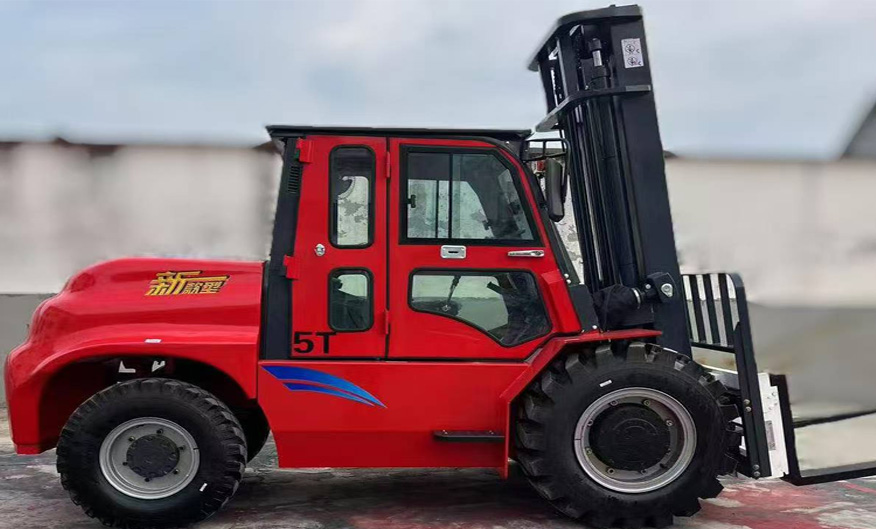
Finally, safety features are integral to all-terrain forklift specifications. ROPS (Roll-Over Protective Structures) and FOPS (Falling Object Protective Structures) are standard, ensuring operator protection in hazardous conditions. Many models also include load-sensing systems, automatic braking, and stability control to prevent accidents. With these specifications in mind, businesses can confidently deploy all-terrain forklifts in the most demanding environments, ensuring productivity and safety.