Navigating the Complexities of All-Terrain Forklift Specifications
2025-08-11 04:30:28
All-terrain forklifts are engineered to handle uneven, muddy, or rocky surfaces, making them indispensable in construction, agriculture, and logistics. One of the most critical specifications is load capacity, which typically ranges from 5,000 to 12,000 pounds. Higher-capacity models often feature reinforced chassis and hydraulic systems to maintain stability under heavy loads. Additionally, load centers—usually 24 inches—must be considered to prevent tipping during operation.
Engine power is another defining factor in all-terrain forklift specifications. Most models are equipped with diesel engines ranging from 50 to 100 horsepower, ensuring sufficient torque for climbing inclines or traversing soft ground. Turbocharged variants offer enhanced efficiency, while emission-compliant engines meet stringent environmental regulations. Operators should also evaluate fuel consumption rates, as rugged terrains demand higher energy output compared to standard forklifts.
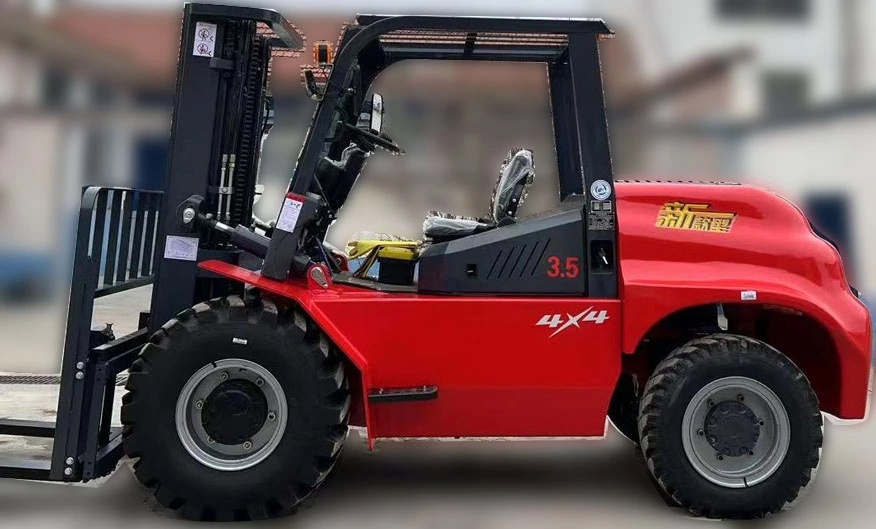
Tire design plays a pivotal role in all-terrain forklift performance. Pneumatic tires with deep treads provide superior traction on loose or wet surfaces, while solid rubber tires minimize punctures in debris-heavy environments. Some advanced models feature adjustable tire pressure systems, allowing operators to optimize grip based on terrain conditions. The right tire selection directly impacts maneuverability and load stability.
Stability features are non-negotiable in all-terrain forklift specifications. Outriggers, counterweights, and dynamic stability control systems prevent rollovers on slopes or uneven ground. Additionally, oscillating axles improve wheel contact with the surface, distributing weight evenly. These features are particularly crucial when operating at maximum load capacity, where even minor imbalances can lead to accidents.
Finally, technological integrations are reshaping all-terrain forklift specifications. GPS tracking, telematics, and automated load-sensing systems enhance operational efficiency and safety. For instance, real-time diagnostics alert operators to potential mechanical issues before they escalate. As industries demand more versatile and reliable equipment, manufacturers continue to innovate, ensuring all-terrain forklifts meet evolving challenges.